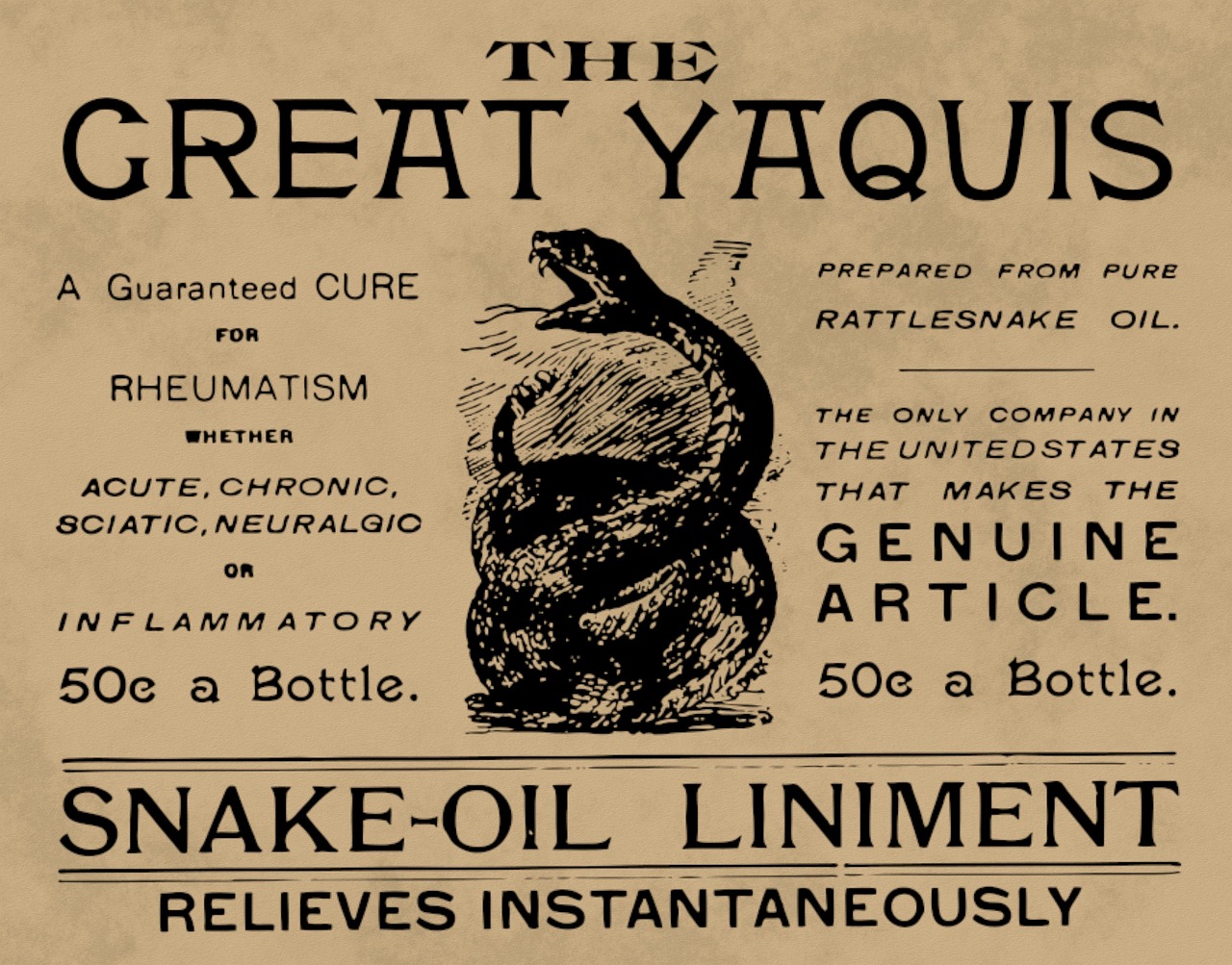
The current crop of political commentaters and steer heavily towards high emotions. They trade in intense emotional stakes and relatability. Why? Because it's the best way to sell you an idea that wins your vote. It's a job that was once reserved for snake oil salesmen.
The product has changed, but the pitch hasn't. In the past, the lie that sold a magical elixir was simple: this oil will help you walk again. In the modern era, the pitch is that voting Republican or Democrat will help you, whether through healthcare or loosening business regulations.
Either way, the seller is doing more than moving a product. He is altering the way people think and view reality.
The promise is that America will be better and society will be better if you vote this way or endorse this candidate. It is a promise that your life will be better, just as a snake oil salesman promised that someone's life would be better if they just bought the tonic and drank it.
And the customer pays, too. They pay with their vote. They pay by lending their voice to a cause or a belief they've been sold.
And this is where the conning comes in. This age where people with a massive audience can sell things to that audience, it becomes easier to sell ideas to them. Primarily because in these instances, the figure being watched has built a parasocial relationship of some kind with their subscribers or followers. That parasocial relationship makes a person vulnerable to the ideas of the person who is speaking to them.
If you truly believe that the streamer you are watching is your friend, and that friend tells you that you should vote for (insert policy here), and you believe that they wouldn't steer you wrong then you are likely to vote for it. And the is the sell is made.
The trust works the same way it did in the medicine show. A snake oil salesman would have plants in the crowd to vouch for the elixirs or tonics. They'd point to someone and say, "This person, step on up. How did my elixir help you?"
Grifters do the same with small events and circumstances they can use to back up what they're saying. The modern political grifter points to a news article about some tragedy or to crime statistics and says, "Look here, see how things are going? Because the idea I'm selling you isn't implemented. We could change that if you would just buy it."
And what does the buyer lose? In a sense, their autonomy and their own critical thinking. By simply buying into what the grifter is selling, and believing it will make America or society better, they abdicate their own thoughts and beliefs about what they think would make America and society better. They lose themselves to a monolith.
This version is worse than the tonic because an idea, once in someone's head, spreads. The ideas people adopt will shape how they live their lives and how they interact with the rest of the world. These ideas shape their perception of reality.
Look at people who now view their Hispanic or Latino neighbors as invaders and, as a result, are less friendly toward them. On the other side, people view their more religious neighbors as dogmatic and inflexible on gay rights or women's rights, as obstacles to progress, and, as a result, are less friendly toward them.
In both cases, the idea changed how they treat the people next door.
Politics has always been the home of liars and anyone charismatic enough to sell themselves as a savior. These new grifters are just like the old snake oil salesman and will keep on grifting. Just as the old salesman would pick up and move to a new town. These new folks will just move to a different idea or belief.
Because you don't have to believe in the idea to sell it. You just need to know how to sell it.